


Pastures Can Thrive Even After Drought
Tips to Help Extend Your Pastures for Cattle During and After Droughts
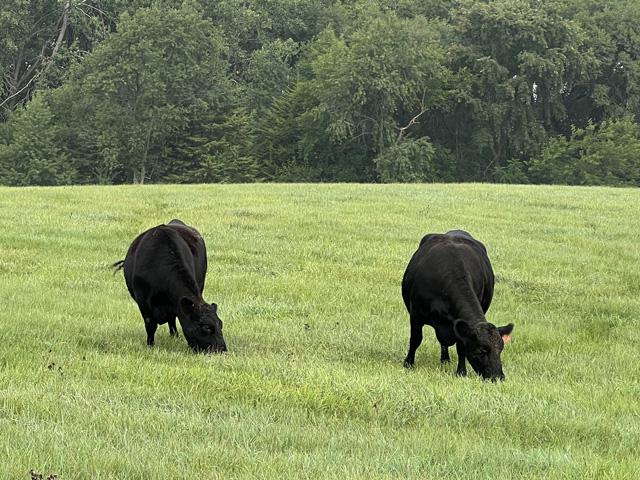
REDFIELD, Iowa (DTN) -- Drought is lingering into this spring and specialists say cattle producers can manage through having good pasture conditions during and after several dry months.
"The drought monitor tells us a lot about where we are currently," Chris Clark, Iowa State University Extension beef specialist, said on a recent webinar hosted by the Iowa Beef Center. "If we look at Iowa, a large part of the northeast part of the state is still in extreme drought and most of the rest of Iowa is in D2 or D1 drought yet." (See the latest U.S. Drought Monitor map at https://droughtmonitor.unl.edu/… and DTN blogs about drought conditions at https://www.dtnpf.com/…)
Clark said this is a concern since April usually isn't considered one of the dry months of the year and cattle producers are usually dealing with mud during calving time.
The drought has been lingering for a while now and will continue to affect part of the cattle country. Part of Iowa has been in at least a D1 drought for 198 weeks, the longest duration of drought since the 1950s. While the dry conditions have improved in parts of the state, in other areas it has worsened.
During the webinar, speakers went over a list of good management practices that can be done to help their pastures during these challenging conditions:
PASTURE TO-DO-LIST
-- Inventory and evaluate pasture condition
-- Delay turnout
-- Fix long-term overstocking problems
-- Manage nutrients
-- Control weeds
-- Seed/renovate
-- Add new forages
DROUGHT LINGERS, CAUSES CHALLENGES
P[L1] D[0x0] M[300x250] OOP[F] ADUNIT[] T[]
"With prolonged drought conditions it's good to have proper forage management in pastures," Clark said. "It's important to look at stocking rate, grazing techniques and weed pressure as these challenges continue from last year."
Clark advised to take care of winter problems soon to help with the health of the pastures by removing manure piles and hay wastage. Getting the right grass species started with a good vigorous stand should happen before cows are turned out to pasture. This will also help suppress weeds.
"We like to see 3 to 4 inches of growth to the grass before cows are turned out. If producers can wait for 5 to 6 inches of growth, it's even better. This helps grass roots get established and regrowth happens faster," he said. This can be challenging when winter feed inventories are running low or gone as cows still need to meet nutritional requirements. Lactating cows have higher requirements than pregnant cows and producers should provide the groups with the proper forages.
PROPER GRAZING PATTERNS HELP GRASS QUALITY
Grazing systems can help with grass growth as well. Clark suggested moving away from continuous grazing and looking at rotational grazing, management-intensive grazing, strip grazing or mob grazing to get the best grass production.
"Implementing a grazing system helps with grass recovery time, drought tolerance, and forage utilization, and allows for more plant diversity," he added.
Clarabell Probasco, Iowa State University Extension field agronomist in south central Iowa, said the outlook for moisture this spring varies depending on the area. While some lack rain by up to 12 inches and have low water levels, others are expecting above-normal precipitation.
Prolonged drought will significantly reduce yield, grazing time and stocking density, but the timing of the stress is critical. Dry conditions in spring and fall can be worse than in summer. Many grasses will go dormant during the summer with limited moisture, which is why she said having proper moisture early can be critical. Lower temperatures can help mitigate some of the stress, but not all.
FIND WAYS TO IMPROVE GRAZING PERIODS
"Interseeding is a good option if you have a poor grass stand in your pastures. Seed-to-soil contact is important for this to be successful," Probasco said. "The best grasses to incorporate are timothy, orchard grass and brome grass. Using a no-till drill is the best option from mid-March through early May. Broadcast seeding will work on heartier seeds, like clover, which should be followed by a drag or harrow after planting."
When using broadcast seeding, the planting rate should be increased by 10% for success and it's important to let the seeded area have good growth before it is grazed. Frost seeding needs to happen in March. Spring seeding can be done through early May. She said to avoid seeding from mid-May through July when temperatures are higher, but late-summer seeding works from mid-July until September.
Before deciding what type of grass to interseed with, it is important to take a soil sample to see where the ground is for fertility.
She said the first factor to focus on is the pH levels, then look at nitrogen (N), phosphorus (P) and potassium (K) levels. Grass can respond quickly to nitrogen, but N fertilization is not as profitable if P and K levels are inadequate.
A one-time N application should be 50-80 pounds in late March or early April as a starting point. Good soil moisture is needed for proper N response. She said to not apply N until weeds are adequately managed and not apply to newly frost-seeded or interseeded pastures to get good utilization of the fertilizer.
WEED CONTROL IS IMPORTANT FOR SUCCESSFUL GRAZING
"Rotational grazing helps with weed control. It is important to avoid overgrazing and low fertility levels. If weeds are under control before fertilizing, it's best. Mowing and using herbicides can help, but it's important to do these during the ideal weather," Probasco said. "And double-check grazing restrictions on the herbicide label."
Summer annuals could be an option in some grazing systems according to Shelby Gruss, Iowa State University assistant professor in forage extension. Those to consider include teff, a sorghum and sudangrass mix, sudangrass, foxtail millet or pearl millet. These annuals all have a large amount of biomass and can be grown with less water.
"These grasses can help you get through the hot, dry months. They may not work great combined with cool-season grass but could work well in a rotational grazing situation. This can help maximize grazing throughout the year," Gruss said.
Most of these work best as a silage option but can also be used for green chop or grazing because of the large amount of biomass they create. These annuals aren't a great choice for baling because they take so long to dry down.
Sudangrass or in combination with sorghum can work well for a multi-cut system. These grasses have a tall stand, from 4- to even 8-foot tall at times. Pearl millet is slightly lower in quality and yield, but a good option because there is no prussic acid, which can be poisonous in large amounts.
Producers have been starting to use more teff grass to produce high-quality hay, but because of the shallow root system, this isn't as good for grazing. It's important to harvest at pre-boot because the seed head is heavy and will cause severe lodging.
"As you think about grazing systems, it's important to know what will grow well in your area and what will help you get the best yield," Gruss added. "These summer annuals thrive in high temperatures."
Regardless of what system or grass variety is in a pasture, proper management will help the plants thrive even after drought or during the dry months.
For more information on grazing systems: https://www.iowabeefcenter.org/…
For more DTN stories on drought and pastures:
"Reassess Stocking Rates and Fertilizer Applications Post-Drought," https://www.dtnpf.com/…
" Different Practices Can Help Cow-Calf Producers Handle Drought," https://www.dtnpf.com/…
Jennifer Carrico can be reached at jennifer.carrico@dtn.com.
Follow her on social platform X @JennCattleGal.
(c) Copyright 2024 DTN, LLC. All rights reserved.