


Barnstorming: Visit Iowa's Unique Barns
Iowa Barn Foundation's Spring Tour Coming Soon
OMAHA (DTN) -- Eleven historic Iowa barns will be open for free self-guided tours in June as part of Iowa Barn Foundation's annual Spring Barn Tour.
From Waterloo, Iowa, to southern Black Hawk and northern Tama counties, Iowa Barn Foundation is inviting you to a fun, family-friendly activity June 22-23 that shows the rich and historical importance of Iowa's farming community.
The barns will be open from 9 a.m.-5 p.m. for the self-guided tours.
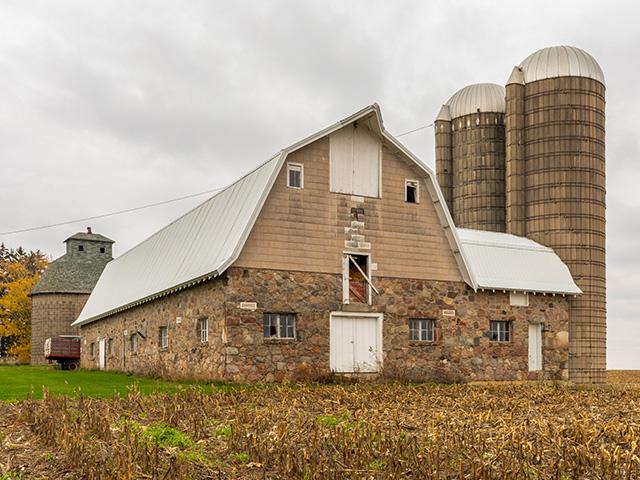
Visitors will experience a diverse array of barns, including a rare round barn and a barn with walls made from locally harvested fieldstones. Many of the barns are still in use, so visitors will likely encounter bison, Suffolk sheep, Babydoll sheep, American Cream draft horses, American Paint horses, chickens, ponies and farm cats.
Iowa Barn Foundation, founded in 1997, is a nonprofit dedicated to preserving Iowa's rural buildings as symbols of the state's early agricultural heritage. Its board of directors and county representatives work to preserve Iowa's agricultural history and endangered barns through education about rural heritage and the importance of barn preservation.
P[L1] D[0x0] M[300x250] OOP[F] ADUNIT[] T[]
Twice per year, the foundation publishes a magazine showcasing historical barns included in the spring and fall Iowa barn tours. Dave Austin, who serves on the board and is a volunteer photographer and magazine editor, told DTN hundreds of visitors attended last year's spring tour, including Iowa's Secretary of Agriculture Mike Naig.
In addition to barn tours and magazines, the Iowa Barn Foundation raises money to provide matching barn rehabilitation grants to property owners for the restoration and preservation of historic barns. In March, the nonprofit received an Ag Leader Award for Leadership in Community presented by Naig.
"We are very proud of what we have accomplished with a volunteer team," Austin said.
While the spring tours rotate by location throughout the state, Iowa Barn Foundation's fall tour is the largest barn tour in the country, slated for September later this year.
"These are barns that have either received a foundation restoration grant or an award for restoration by the owner. We had 72 barns on our fall tour last year, including seven rare round bars," Austin said.
Admission to the Spring Barn Tour on June 22-23 is free. Lunch (by reservation) will be from 11 a.m.-1 p.m. June 22 at the Frost Barn in Waterloo. The menu includes a pork loin sandwich, cheesy potatoes, baked beans, a cookie and a drink, provided by Randall's Meats and Catering in Hudson. Each reservation is a $15 donation. Advanced reservations are encouraged and available for reservation online until June 1.
To reserve your lunch, visit https://iowabarnfoundation.org/… or mail a check to Wayne Frost, 1745E Eagle Road, Waterloo, IA 50701.
Full tour details and a tour map can be found in the Iowa Barn Foundation Magazine (mailed to member donors) or online: https://iowabarnfoundation.org/… .
Susan Payne can be reached at susan.payne@dtn.com
Follow her on social platform X @jpusan
(c) Copyright 2024 DTN, LLC. All rights reserved.